Showing posts with label cryptocurrency. Show all posts

Monday, November 5, 2018

Cryptocurrency Is Going Into Space


ConsenSys, a blockchain company with many branches but most involving Ethereum, the cryptocurrency co-founded by Joe Lubin, has purchased Planetary Resources. President & CEO Chris Lewicki and GC Brian Israel of Planetary Resources will join Consensus as part of the deal. 

At first glance it seems like an awkward match, but think about it. Like Bitcoin, Ethereum requires large amounts of power to be mined. In space there is plenty of power, if you have the solar panels, but there is no way to get that power back to Earth easily where it can be sold. If you hook that power in orbit up to a computer mining Ethereum, the cryptocurrency can then easily be transmitted back to Earth - instant wealth.

Yes, it’s expensive to send solar panels into orbit, but that cost is coming down quickly with the success of private launch companies such as SpaceX, Blue Origin, Virgin Galactic, and Orbital Sciences. Also, those solar panels are 30% more efficient in space. If you are going to launch all those solar panels and crypto miner into orbit, why not send an asteroid prospector or miner with it? 


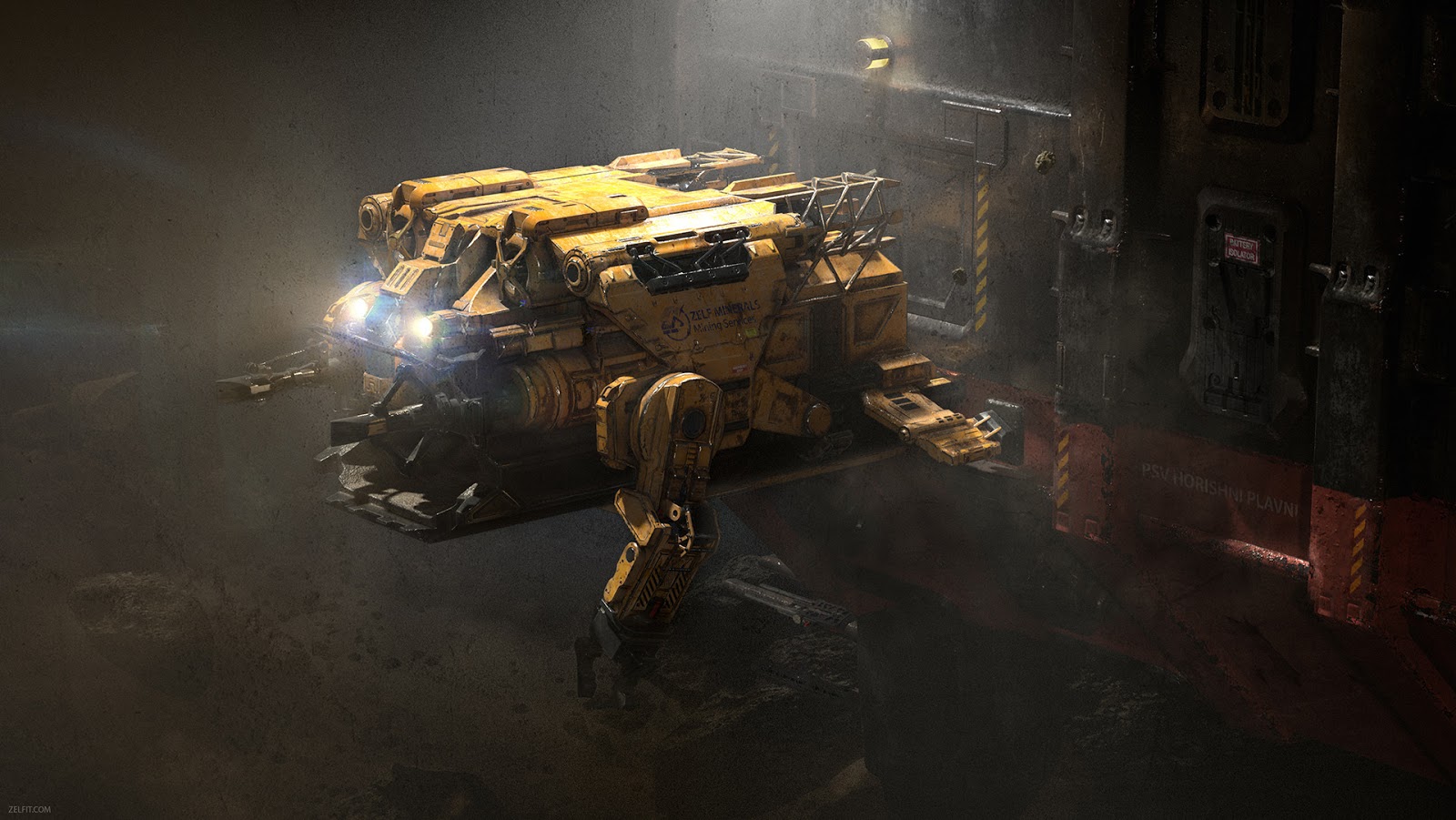
Once asteroids are successfully mined, they can bring those valuable metals and water back to the orbital cryptocurrency mine. The metals can be stashed in re-entry capsules to be sent back to Earth. NASA has developed a new re-entry shield that would work well for this. The water can then be used to refuel the miner transport and send it to the Moon where the new Lunar  Orbital Platform Gateway is in need of water to refuel the next mission to Mars.

Thus, these solar panels and crypto coin miners morph into way stations, maybe even space warehouses, for material that can fuel a nascent presence by mankind in space. Soon the warehouses have enough asteroid material to build a space habitat. Most of the habitat will be 3D printed in orbit and put together by AI drones. This is how it starts.

Other articles you may enjoy:


Wednesday, October 10, 2018

Recycling Asteroids For Fun and Profit


Asteroids


You did it! You raised $5 billion dollars to mine an asteroid and did just that. They didn’t think you could, but $10 billion for immediate delivery of iron, platinum, nickel, and water to the orbiting habitat project just cleared your bank with an agreement to supply another $10 billion worth of material over the next 15 years. 

Paper bags take 5 X the water to make and 7 X the fuel to transport than plastic bags 


Now what to do with a mined-out asteroid? 

Asteroid being worked on.


Careful programming of the mining drones left tunnels in concentric circular paths around the axis of the asteroid. It spins around that axis, producing .75 artificial gravity in the tunnel nearest the surface. It still has a lot of equipment on it, including a used coil gun/ mass driver propulsion system with enough iron left to run it for another 300 years. Ice storage systems are intact and some water left entrained in rock, about half a cubic mile. A 200 feet diameter repair bay has been cut a quarter mile deep in one end with a space tug parked in the center on tensioned cables. The bay is connected by airlock to the pressurized habitat portion of the asteroid that all those mining tunnels have been turned in to. Several side caverns are packed with deep space drones of various capability. The crown jewel is the new fusion reactor for those dark, cold times out in the asteroid belt when the Sun gets too weak to make those solar panels work efficiently.

Why so much equipment and careful design for a mined-out asteroid? 

Highly modified asteroid.


The Swiss government has just rented the asteroid for its next two laps around the Sun, about two and a half years, for deep space studies of the asteroid belt and a flyby of Mars to deliver supplies to the Scandinavian colony there. That rent means another $750 million dollars; half Swiss Francs, half Aquacoin (the water based cryptocurrency used in space); into the bank account. And you thought RV rentals were outrageous. Actually, it’s quite cheap for what they’re getting, but you have ulterior motives. While the Swiss are doing their studies, your prospecting drones will be cataloguing more asteroids in the belt with the idea of finding another worth mining. The Swiss know this. All deals are transparent in space.

Astronauts putting net on asteroid.


This scenario presupposes some technological developments that may or may not take place over the next few decades. Practical nuclear fusion is, obviously, the biggest hurdle. The artificial intelligence to run autonomous drones is another. Once those technologies are up and running, recycling mined-out asteroids into Solar System spanning space ships will be no problem. They have a built-in radiation shield. Spun up, they have artificial gravity. Those are two of the big problems in navigating long distances in deep space. 

Asteroid miner drone.

There is one sneaky, ill-perceived technological hurdle to be overcome to make this series of future events likely. The human aging problem must be solved. Humans need to live longer in order to take on the kind of projects needed to become a spacefaring species. Humans need to live in good physical condition for 150 to 200 years after adolescence and before declining into old age. Not only will it make such projects more likely, it will force humanity into a longer view of the future. We will start taking care of the planet, recycling to the max, planning for the far future. Why? Because now it’s personal. You no longer need the kids and grandkids as an excuse to do good things for the future. Do it for yourself! You’re going to be there. 

It costs $4000 to recycle ton of plastic bags worth $500 on open market. 


Back to asteroids. At some point, someone is going to get brave and break that asteroid out of its natural orbit with the propulsion drive, start using planets and moons as gravity slings, and really start exploring our Solar System. It’s a big place. People could be on missions that last decades exploring the moons of Jupiter and the rings of Saturn. I wonder what the science fiction of those times will be like.

Thursday, September 6, 2018

What Will Be the Most Common Currency In a Future Space-Based Society?


Courtesy NASA

Gold coins? Platinum pellets? Grains of cobalt? I predict water will be the preferred currency in outer space. You can drink it, bathe in it, breathe it (oxygen), burn it in rocket engines (oxygen and hydrogen), grow things (hydroponics), and protect yourself from radiation. 

Water is easily stored, shaped, and divided up for transactions. It can be flash frozen and quickly thawed with the deep cold of space and the intense radiation of the Sun.


Paper bags take 5 X the water to make and 7 X the fuel to transport than plastic bags 


The current method of water storage in space looks like duffel bags with a spout as this picture reveals. This astronaut is obviously reveling in the fortune of water surrounding him. That water is worth $83,400 per gallon based on the current cost of $10,000 to put a pound of something into orbit. Hopefully, it is Evian or Fuji.


Water storage aboard ISS - Courtesy NASA

Or one could build a palace of ice in outer space. There is that much water available on some asteroids. Just make sure the seal between the ice and the airlock stays frozen solid. 

Small entrepreneurs will make their first fortunes by seeking out chunks of ice in the asteroid belt or simply mining close-flying asteroids for the liquid gold. Planetary Resources, an actual asteroid mining company, has recently stated that it will concentrate on water instead of precious metals as its first acquisition. 

Water globule floating on ISS - courtesy NASA


The companies that first acquire water in space will be like the merchants that made fortunes selling picks and shovels to the forty-niners in the California gold rush. 

The importance and value of water will demand that water recycling and reclamation units aboard space vehicles and habitats be ubiquitous and efficient. Even if someone dies in space, the water in their body will be reclaimed before burial in space or transportation back to Earth. This will be part of a signed agreement when someone goes to work in space. Their immediate kin will get some portion of the value of that water in space, even if they are on Earth. 


Saving the world one bag at a time. Recycling genius.  


Security will be a concern as well. When a worker’s contract ends, what’s to keep him from filling flexible bags of water and hiding them about his body and carry-all? When he gets back to the orbiting end of the Lunar Space Elevator or a space station near Earth, he turns his water in for some Earth-based currency like gold or platinum before going back to the planet. 

The biggest non-recoverable expenditure of water in space will be for rocket fuel. The biggest recoverable use for water in space will likely be radiation shielding. It is efficient over a spectrum of radiation including cosmic and gamma rays. In fact, radiation shielding may be designed to not only protect against radiation but to be a reserve source of fuel as well. 

It is possible a water-based currency, both physical and digital, will be established in a space-based culture of dozens of companies and thousands of workers. Since water melts so readily, the gold coins, platinum pellets, or grains of cobalt mentioned before might actually be used; and they will represent some predetermined amount of water. That amount will most likely be decided by some committee with all of the space-based companies represented. The value of water will fluctuate as discoveries are made on asteroids being mined and unrecoverable expenditures of water such as rocket fuel are used up. There may one day be a cryptocurrency based on water - H20coin, of course. 

The actual water will be kept in some safe place, a giant chunk of ice hidden, or well-guarded, or both. As a matter of course, owners of large quantities of water in space will, at some point, have that water melted and mixed with some small amount of radioactive isotope to “brand” it. It won't be enough to affect health, but it will be easy to track if it is stolen. 

There is probably more water in asteroids than on Earth. Its value in space comes from the difficulty and expense of finding and securing it. Those who do this first will be the future lords and princes of outer space. They will control the lifeblood of space.

Other articles you may enjoy: